David&

Campus Minister Graphic Designer Brand Strategist Choral Musician Management Consultant Teacher Author Innovation Strategist UX Researcher Design Strategist

I’ve spent thirty years asking the same question:
how do people make sense of things?
The institutions change. The question stays.

David McGaw at the Great Salt Lake

Design Strategist.
Human-centered
from the start.

History teaches you to ask: how did we get here? Design teaches you to ask: where could we go? Research teaches you to ask: what do people actually need? Spend thirty years cycling through these questions and you start to realize they are the same question, viewed from different angles.

I came to design by an indirect route—a History degree from YaleI wrote my senior thesis on the Roman emperor Trajan (but was secretly more enamored with the letterforms carved on his famous Column than with his string of military victories in Dacia)., a decade in brand strategy, graduate work at IIT’s Institute of Design, a stint at McKinseyMy favorite project: researching and co-authoring a comprehensive look at philanthropic prizes. Read it ↗, years of innovation consulting at Doblin and LUNARDoblin (founded 1981 by Jay Doblin in Chicago) was among the first firms to treat innovation as a designable system rather than a lucky accident. LUNAR, a San Francisco firm founded in 1984, was acquired by McKinsey in 2015. Both shaped what design-led strategy consulting eventually became.—before arriving at Google in 2017 to lead a UX research team for Google Assistant. Later, I drove UXR and strategic foresight for a series of emerging technology initiatives: AI for climate change, home robotics, quantum computing, AI agents, and what it means for humans and machines to genuinely collaborate. Since 2024 I have been at Google DeepMind, working on what I can only describe as the most consequential design problem of my lifetime: how to build artificial intelligence that genuinely serves human beings.

Along the way I co-authored naked innovation: uncovering a shared approach for creating valueRoger Martin called it “A terrific contribution to the integration of design and management.” nakedinnovation.com ↗ (IIT Institute of Design, 2007) with Zachary Jean Paradis. I taught in IIT’s graduate design program for five years, and gave a visiting lecture series at CEDIM in Monterrey, Mexico. I am a choral musician, a committed Anglican, a hiker with a fondness for the Sierras, and a tech worker who ponders ephemeral questions of beauty.

Maybe my interests are more random than focused. But I’ve come to believe that’s actually useful.

Currently

Google DeepMind

Education

Yale University
BA History, 1990

Graduate

IIT Institute of Design
M.Des., 2007

Author

naked innovation, 2007

Location

San Francisco Bay Area
LinkedIn

dmcgaw

Handing off context,
not summaries.

Two recent UXR experiments started from the same frustration—that the most valuable user insights rarely reach product teams in time, and in a form they can use, at the pace of vibe-coded prototyping. The first experiment asked whether research findings could be delivered as serialized, reality-TV-style episodes, low-cost enough to run from any transcript, structured enough to build genuine narrative arc. It worked. Product teams came back for episode two not because they were scheduled to, but because they wanted to know what happened next. More usefully, it surfaced a deeper question.


The most valuable artifact turned out not to be the video—it was the structured model of the user that had to be assembled in order to make the video. The second project followed that thread: synthetic personas as contextual engines—portable, warm-data-rich Markdown files a developer can inject into a vibe-coding session so the AI encounters not a feature brief but a specific human life. The quiet reframe underneath both projects is that the handoff model may be wrong. The better move is not to hand off summaries but to hand off context: the user themselves, portable and present in the room.

Cold data Demographics · Goals · Frustrations Digital exhaust Jobs to be done · Layered search history AI prompt history Warm data Physical and sensory context · Calendar and rhythm The relational web · Epistemic velocity Aesthetic shibboleths Portable context, injected at the top of a vibe-coding session.
Product implications

What I take from both projects is that research teams have more leverage than we’ve been using. The episodic pipeline is a genuinely low-cost way to make insights land; the synthetic persona framework is already portable enough to use in a vibe-coding session today. The work ahead is to turn the synthesis process itself into a repeatable tool—so any research team can move from transcript to portable context without rebuilding the method each time.

Four questions I can’t
stop thinking about.

These are works in progress—half-formed, genuinely uncertain, and all the more interesting for it. They share a common territory: the ways human perception diverges from reality, and what that divergence means now that artificial intelligence has entered the picture.

AI · Aesthetics · Epistemology

The Bait of Beauty:
Form and Truth in the Age of AI

We use beauty as a proxy for truth—a perceptual shortcut so ancient and so useful that we barely notice we’re doing it. Beautiful things tend to be well-made, carefully considered, authentically crafted. The Mona Lisa earns our trust before we consciously decide to give it. AI has become extraordinarily good at generating formal beauty: the kind that registers immediately through the senses rather than through slow deliberation. Which means the shortcut is now broken. The heuristic that helped us navigate the world for millennia is increasingly unreliable. It is worth asking what was actually doing the work.


Product implications

Responsible interfaces need to be inspectable and reveal AI “fingerprints.” I’m proud of colleagues’ work on SynthID and have made some small contributions to understanding how users understand it. More broadly, AI product developers should recognize the transformed landscape: truth claims need to be backed up with facts and reasoning, not just excellent presentation.

AI · Agent Design · Trust

Consequentiality:
Your Worst Fears (That Aren’t Even That Likely)

Think about the first time you sat behind the wheel of a car. You weren’t processing abstract collision statistics—you were gripped by the visceral what if of a missed brake, a wrong turn, a consequence you couldn’t undo. This is the essence of consequentiality: the felt sense of potential outcome that routinely trumps rational risk assessment. As AI systems move from simple task execution toward complex, multi-step agent journeys, users encounter an uneven landscape of stakes. Retrieving options feels safe; sending the actual email does not. Touching multiple data sources in sequence conjures fears of unknown and unexpectable interactions. The gap between what AI systems actually risk and what users feel they risk is a design problem—and an emotional one—that the field has barely begun to address.


Product implications

I advise AI product leaders on ways to more empathetically anticipate user concerns and over-invest in proactive transparency. Distinguishing between what feels irreversible, and what can actually be changed, helps reduce anxiety.

AI · Cognition · Information Design

Probabilacy
(Chances Are, You’re Thinking About it Wrong)

Imagine a winding mountain road in thick fog. You have a map—a digital proxy of the terrain—but the immediate challenge is something I’ve come to call probabilacy: the ability to understand and act upon uncertain information. Much like literacy, it’s a capacity most people think they have in greater measure than they do. Not all uncertainty feels the same. Aleatory uncertaintyFrom Latin alea — the die. The same root as Caesar’s “alea iacta est.” Aleatory uncertainty is irreducible: no further information tells you which face will show. The only rational response is to prepare for multiple outcomes simultaneously.—pure chance—calls for hedging, keeping options open. Epistemic uncertainty—where a binary truth exists and somebody knows it—generates hunger: users don’t want a cloud of possibilities, they want the answer. When people look at a weather forecast, they’re rarely thinking statistically. Designing for that distinction, rather than papering over it with vague percentages and emoji clouds, is one of the most consequential opportunities in AI-powered information design.


Product implications

Even the simplest weather forecasts can be misunderstood. Standardizing presentation (I still think percentages are the best) helps, but we need to parse out real-life effects—if it’s 40% chance of rain, do you need an umbrella? How you help a user process that “fuzzy” future directly affects whether they believe you’ve helped.

AI · Discernment · Warm Data

Taste:
The Sourdough Starter of the Mind

Ask a serious baker about their sourdough starter and they’ll tell you things that sound like they’re describing a person. It has a history. It has a personality. It responds to what it’s been fed, to the temperature, to whether you’ve been attentive or neglectful. Human taste works the same way—not a preference list but a living culture, accumulated over time, responsive to every new ingredient the world adds to the jar. What makes it generative is precisely that it can’t be replicated from the recipe alone. AI has processed every loaf ever written about; it has never kept a starter alive for three years. That gap has a name. Nora Bateson calls it warm data—the relational, transcontextual information that gets stripped away in transit to any training corpus. Taste, in this light, is less about judgment (pattern-matching, at which AI is formidable) than discernment: the capacity to tell the right word from the nearly right word, the lightning from the lightning-bug. In an era where formal competence becomes cheap, editorial authority becomes the rarest thing—and it belongs to those who can recognize when something is technically correct but contextually hollowThe phrase that prompted this essay. AI can satisfy every formal criterion—rhythm, structure, vocabulary—while missing what the moment actually requires. Recognizing the difference is not a skill that scales, or that can be averaged., and to hold the warmth the collaboration requires.


Product implications

This is early and speculative ground, but the implication that compels me most is that the human is not merely the QA layer at the end of an AI pipeline—they are the source of warmth in the collaboration. The design opportunity is to build interfaces that make that contribution visible, easy, and structural: surfaces that elevate editorial authority rather than automate it away, and a product vocabulary that takes seriously the difference between a user and their warm data.

What I’m reading, hearing,
and thinking about.

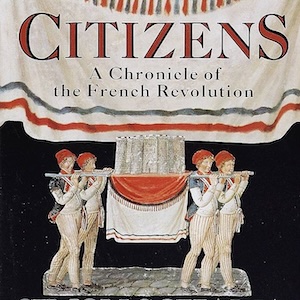
Cover of Citizens: A Chronicle of the French Revolution by Simon Schama
Reading Citizens: A Chronicle of the French Revolution by Simon Schama

A masterclass in the “high-low” synthesis, grounding the metaphysical abstractions of liberty and terror in the visceral, urgent reality of the skyrocketing price of a loaf of bread. Schama’s ability to weave the personal heroism of individuals into the surging tide of the revolution provides a profound mental model for how history is actually lived.

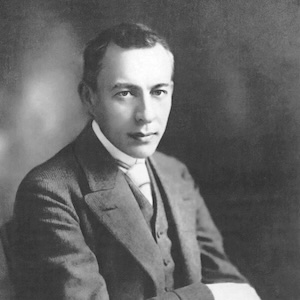
Sergei Rachmaninoff—‘In the Silent Night’
Listening In the Silent Night (В молчаньи ночи тайной) by Sergei Rachmaninoff

As I prepare to sing the All-Night Vigil with the SF Choral SocietyMy choral home in San Francisco. Upcoming concerts ↗, Rachmaninoff’s earlier songs demand a different kind of devotion. Studying this piece with my voice teacher has revealed its deeply felt, chromatic nature—a romantic intimacy that feels both unhurried and urgent.

‘A Lady Receiving Visitors (The Reception)’ by John Frederick Lewis
Looking at “A Lady Receiving Visitors (The Reception)” by John Frederick Lewis

Revisiting this John Frederick Lewis painting at the Yale Center for British Art after thirty-five years was an exercise in the fallibility of memory. While I had misremembered specific elements of the composition, the vibe that drew me in as an undergraduate remained immutable: the masterful curation of light as it filters through stained glass and carved wood screens, dappling every surface and fabric in a liminal glow.

The Fall of the Incas—a series on The Rest Is History
Thinking about The Conquest of the Incan Empire mini-series

Listening to this “The Rest Is History” seriesTom Holland and Dominic Sandbrook, digressive and erudite, turn narrative history into late-night conversation. Empire of Gold, part 1 ↗ has me reflecting on how the collision of two utterly alien civilizations can be viewed as both a grand historical inevitability and a collection of terrifyingly personal encounters.

Coast redwoods at Muir Woods National Monument
In the field Muir Woods National Monument

My weekend hikes often take me to more secluded mountains, coastlines, and redwood groves, but the visit of a friend from Florida gave me a reason to return to the oldest, most grand trees nearby. The texture of the trail and the stillness of the redwoods offer a grounded sensory detail that resets the spirit.

Cover of Gaudy Night by Dorothy L. Sayers
Re-reading Gaudy Night by Dorothy L. Sayers

Returning to Harriet Vane in the cloisters of Shrewsbury College, I am struck by the intellectual rigor Sayers demands of her characters. It is a meditation on the ultimate cost of love: the difficult, adult choice to remain vulnerable and accept love... without sacrificing the integrity of the self.

Let’s think
together.

I’m open to conversations about design, artificial intelligence, beauty, probability, and whatever else connects them. Reach me at the usual places.